+86-15221358017 / 15221358018 /15221358066/13916032681 info@purilaser.com

Views: 3 Author: Site Editor Publish Time: 2026-06-30 Origin: Site


If someone calls our team and says, “My CO2 laser tube has no power,” I usually do not start by talking about the tube.
That may sound strange for a factory that makes CO2 laser tubes. But after many years in this business, we have learned to slow the conversation down. A laser machine is a system. The tube is important, of course. So are the chiller, mirrors, lens, power supply, wiring, air assist, software settings, and the person standing beside the machine.
Puri Laser has manufactured glass CO2 laser tubes in Nantong since 2009. We supply machine builders, spare-parts sellers, repair teams, and end users in different markets. The same question comes back again and again: “How do I know whether my tube is really finished?”
Here is the way we think about it inside the factory.
First, look at the job the machine is doing. Not the wattage printed on the label. Not the biggest number in the catalogue. The real job.
A shop engraving wood gifts and leather labels does not need the same tube as a workshop cutting thick acrylic every day. A small 6090 machine and a 1390 production cutter may both use a glass CO2 laser tube, but they live very different lives. Tube length, power supply, chiller capacity, lens, mirror size, and working space all have to match.
This is why we ask customers simple questions before recommending a model. What material do you cut every week? What thickness is normal? How many hours does the machine run on a busy day? What chiller do you use? Does the operator know the working current, or only the controller percentage?
These questions are not delay. They are protection. A tube that is too small will be pushed hard. A tube that is too large may be paired with weak cooling or the wrong power supply. Either mistake can turn into an after-sales problem later.
Cooling is the next thing we ask about. In many early power-loss cases, the chiller tells half the story.
A CO2 laser tube produces heat whenever it fires. If water flow is poor or the water gets too warm, the tube may still cut for a while. The trouble is that the damage is often gradual. The operator sees only the final symptom: slower cutting, rougher edges, less stable output.
For production machines, especially 80W and above, an industrial water chiller is the safer choice. A bucket and pump can make sense for a short test or a small hobby setup. It is not a good long-term plan for a workshop that depends on the machine for orders.
Keep the water clean. Check water flow before firing the laser. Watch the temperature during hot months. In humid areas, also watch for condensation if the water is too cold, especially near the high-voltage end. That is not just a performance issue; it can become a safety issue.
Current is another place where people get fooled. The control panel may say 60 percent, but that number does not tell you the real tube current. A milliamp meter does.
If the current is above the recommended working range, the tube may look strong today and age faster over time. This is one of the most common quiet mistakes. The operator wants to keep yesterday’s cutting speed, so the power setting goes up a little. Then a little more. After a few weeks, nobody remembers where the original setting was.
Before increasing power, check the cheap problems first. Is the lens clean? Are the mirrors clean? Is the beam aligned? Is the focus right? Is the chiller running warm? Did the material supplier change the sheet quality? A dirty mirror can make a good tube look weak.
Installation also deserves more patience than it often gets.
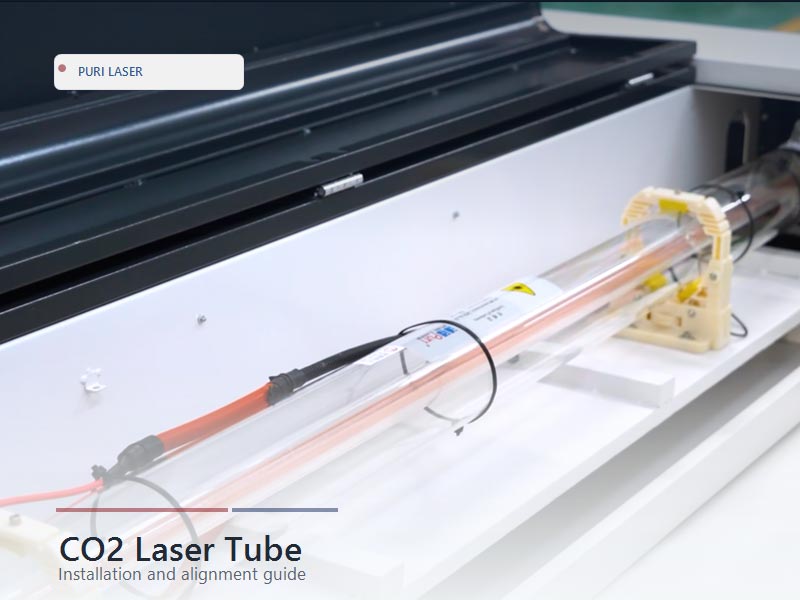
A replacement tube should sit in its mounts without being twisted or squeezed. Cooling water should enter from the lower side and leave from the upper side, so bubbles can escape. A trapped bubble is small, but it can create a hot spot in the wrong place.
The high-voltage wire should be dry, firm, and insulated well. Keep it away from metal edges and wet surfaces. After installation, align the beam at low power first. Do not judge the tube by one full-power cut before the optical path is correct.
For export orders, packaging is part of quality. A glass tube may travel a long distance from China to a customer’s workshop, so shock protection matters. Puri Laser treats packing seriously, but the customer should still inspect the tube after delivery and before installation. It takes a few minutes and can prevent a confusing problem later.
There is one low-tech habit we like very much: keep a small machine record.
Write down normal speed, current, material, and result for regular jobs. Note water changes, mirror cleaning, lens replacement, and unusual events. When the machine starts behaving differently, this record gives the repair person something better than memory.
For distributors, this habit is useful too. A customer who can say “the current is the same, the chiller is at this temperature, and the lens was cleaned yesterday” is much easier to help than a customer who can only say “no power.”
So when is replacement the right answer?
If cooling, current, optics, alignment, power supply, and material have all been checked, and the tube still cannot hold stable output, then replacement is practical. Warning signs include lower cutting power at the same current, unstable discharge, uneven engraving, strange beam behavior, or jobs that must be slowed far below normal settings.
For a business that uses one laser machine every day, keeping a spare tube is not wasteful. Downtime can cost more than the part.
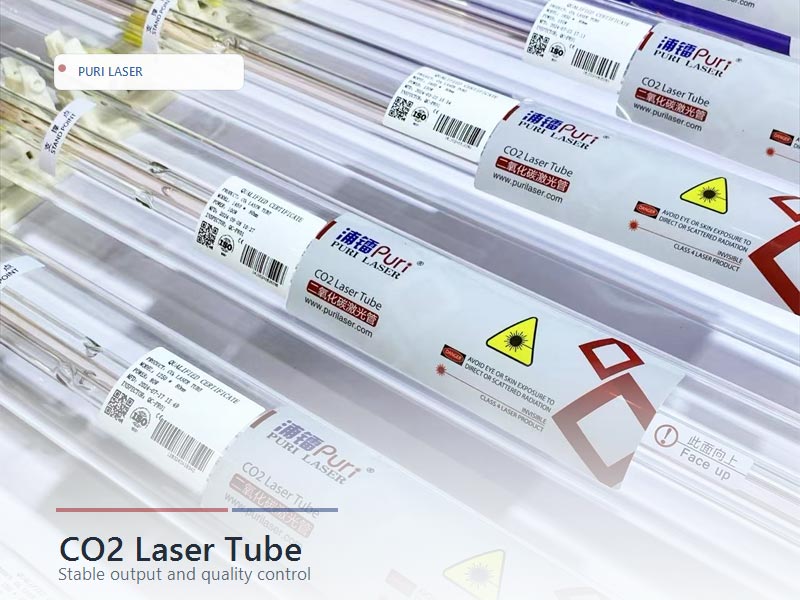
A strong Chinese CO2 laser tube factory should offer more than a low price. Buyers need stable batches, suitable model advice, careful packaging, fast communication, and technical support after shipment. That is the value Puri Laser tries to provide.
Our view is simple. A good CO2 laser tube starts in the factory, but its life is decided in the workshop. Choose the right wattage for the real job. Keep cooling stable. Respect the working current. Install the tube carefully. Clean the optical path before small problems become expensive.
If you are replacing a CO2 laser tube, building a laser machine, or preparing stock for customers, Puri Laser can help match the tube to the actual workload. Start with the machine conditions, not only the wattage. That one habit prevents many wrong purchases.